

It’s like standing on a busy city street while your storefront is tucked in a hidden alley. Customers walk by, oblivious and each missed glance is lost revenue. The noise of digital marketing jargon fills the air, making it even tougher to know which advice to trust or whether new ai-powered seo promises real results or is just smoke and mirrors. The pressure mounts with each passing week. Your team is lean, budgets are tight and the worry that you’re pouring resources into the wrong tactics grows.
Yet, there’s hope. With a smart blend of search engine optimization and sem, even small businesses can break through and show up “above the fold” where it matters most. Neil Patel proves every week that with focused action, not bottomless budgets, entrepreneurs can capture the organic lift and visibility they deserve.
You don’t need a massive agency or to chase every new trending trick. Armed with the right content creation tools and strategy, you’re ready to rank and bank. You can turn visibility challenges into steady scalable growth. Starting right now.
What Is SEO/SEM? Key Differences Explained
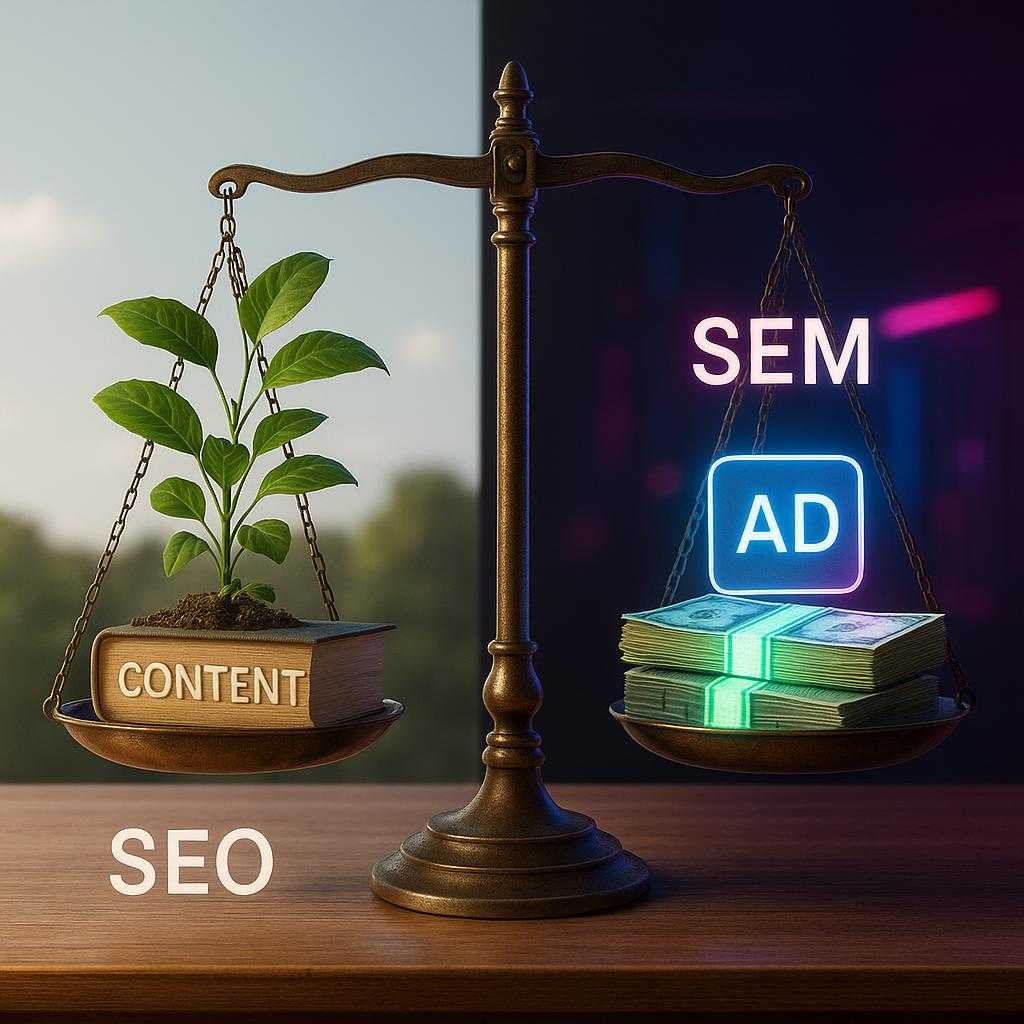
SEO/SEM for small business is about getting your products and services found online. SEO (Search Engine Optimization) focuses on organic search visibility, improving site quality. SEM (Search Engine Marketing) is broader, using paid ads to increase presence on search engines. Many pros, like Rand Fishkin, remind us that while SEO is technically a subset of SEM, they are used as distinct strategies in practice. Clear definitions erase confusion and set the stage for an effective seo strategy.
Both approaches matter for entrepreneurs and business owners, especially when every dollar counts. SEO tools help boost rankings over time, driving consistent traffic from search engine results. SEM leverages budget to put you instantly above the fold, which is especially valuable during promotions or slow seasons. Used together, they multiply outcomes, filling gaps and balancing short- and long-term wins.
| Feature | SEO | SEM |
|---|---|---|
| Type | Organic search optimization | Paid search ads + organic SEO |
| Cost | Low direct spend, time-intensive | Pay-per-click, rapid PPC burn rate |
| Results Timeline | Months to build, evergreen content impact | Immediate, lasts while funding active |
| Control | Relies on algorithms, site quality | Full bid/budget control |
| Best Use-Case | Building audience and trust long-term | Fast offers, testing, time-bound promos |
| Measurement | Traffic, ranking, engagement metrics | Clicks, conversions, ad spend ROI |
For example, a local bakery might invest in affordable content solutions for seo tools to build long-term discovery. Then reallocate a portion of budget to SEM for seasonal campaigns. Mastering both gives small businesses their best shot at growth.
1. Map Goals and Choose the Right SEO/SEM Mix
Picture clarity. You map your business ambitions, and suddenly the blurred lines between content optimization and keyword research become a strategic blueprint. Every campaign, whether SEM or SEO, lands with purpose and measurable impact. You don’t waste a dollar. Competitive analysis is no longer a dreaded chore, but a simple checkmark in your growth playbook. Many entrepreneurs wait for this kind of certainty; you can have it now and see the needle move for your brand authority.
To get there, start by matching your goals to your core audience and business type. If you’re a local brick-and-mortar shop seeking foot traffic, focus initial efforts on local seo, then supplement with targeted pay-per-click (PPC) campaigns only when special promos or events demand urgency. For instance, a gym may want fast SEM ads for a January rush. Ongoing content production will keep organic search strong year-round. On the other hand, e-commerce stores often succeed with a hybrid: SEM for limited-time seasonal deals, and ai writing tools for efficient long-tail keyword content.
Consider your budget, too. SEM delivers instant visibility but can burn through ad dollars fast if not closely monitored. Think of your PPC burn rate as gas on a fire: use it for quick sprints. SEO requires steady commitment; content quality matures over months, not days, but produces sustainable search visibility. Use the insights from Aleyda Solis and recent research on the 7 Best Marketing Strategies for Small Businesses in 2025 to balance urgency with long-game strategy. A mix customized to your needs is how entrepreneur seo builds compounding growth.
2. Master Keyword Research for SEO and SEM Success

You could be the business owner who lands long-tail keywords your competitors don’t even see coming. Imagine checking your dashboard and seeing high-ranking content for organic search. No money left on the table. That’s the real benefit of unified keyword research: every effort propels scalable content and business growth, not just busywork. Let’s follow the playbook Brian Dean champions, focusing on practical stepwise execution for measurable results.
1. Brainstorm Customer Questions That Lead to Clicks
Start with what your audience asks most. Write down questions real customers ask you. Look for patterns. These become the root for future content briefs. For example, "How can I get more Google reviews for my florist shop?" reveals both intent and opportunity for personalized content.
2. Use Smart Tools for Data-Driven Content
Select affordable or free keyword research tools like Google Trends. They help you uncover opportunities with data-driven content. Analyze monthly search volume to boost your seo efficiency.
3. Analyze the Competition Before Diving In
Check what your rivals rank for. Ahrefs Webmaster Tools can reveal real-time gaps and strengths. For instance, a bakery might discover a missing guide on gluten-free cake options. An immediate win for content marketing.
4. Map Keywords to Search Intent, Then to Budget
Now, assign every keyword a stage in your conversion funnel: awareness or purchase. Determine which belong in organic posts maximizing your content relevance.
5. Prioritize Based on Resources and Plan Ahead
Decide which keywords to pursue organically. Focus paid efforts on terms where clicks convert quickly.
6. Test and Track, Then Refine
Set up split testing for organic titles. Measure what drives a meaningful traffic spike. Zero in on content engagement. For step-by-step guidance, check out A 6-Step Guide to Improving Your Small Business SEO and GEO.
3. Optimize Content for Higher Ranking and Ad Quality
Optimizing for Google’s algorithm isn’t about keyword stuffing. It’s about delivering value in every click. By focusing on quality, you not only win trust but drive both organic reach. Barry Schwartz often surfaces the latest insights showing algorithm shifts rewarding real user value over empty repetition. Put your business information like address front and center for local results. Each tweak boosts search performance.
Quick Wins to Help Content Outrank and Outperform:
- Meta tags: Add descriptive, unique meta titles that entice genuine clicks and match user intent.
- Compelling headlines: Write clear, benefit-driven headlines.
- Landing page copy: Ensure every ad and search link points to a targeted, relevant page with your unique selling points, a local business address, and website (more local SEO tips).
- Content ideas: Address search intent with tips or how-tos using fresh content ideas tailored from live search trends.
- Linking suggestions: Internally link to top-performing pages to boost link juice and highlight priority offers.
- Content audit: Regularly review published pages for outdated info to maintain strong search engine ranking.
For example, updating your meta tags and landing page copy can move your best offer above the fold in organic results. Above-the-fold content is what users see right away. This makes every impression count twice: once for authority, again for conversions.
4. Use AI Tools to Scale Content Creation and SEM Ads
Nothing beats the relief of seeing your content calendar filled without burning out. AI-powered platforms are the standing desks of modern marketing, boosting efficiency whether you launch new SEM campaigns or keep up with on-site SEO. With automation and smart content insights, business owners can scale content creation to keep up with search algorithms and growing market demands.
Writemeister: Best for Human-Sounding Blogs and Content Briefs
This platform produces SEO-ready articles and content briefs that match your brand authority and save hours each week. Use it when you want search algorithms to favor your site without hiring an entire team.
Jasper and Writesonic: Efficient for Ad Copy and FAQs
These AI in marketing favorites help generate SEM headlines fast. Their content automation shines for small businesses needing to launch multiple campaigns quickly while maintaining quality.
SEMrush Content Assistant: Optimize with Built-In AI Recommendations
If your content gap analysis needs expert-level scoring and structure, SEMrush Content Assistant gives actionable insights for high-performance blogs and landing pages. It’s ideal for those improving both creative and technical content performance.
Google Ads AI Suggestions: Boost Ad Quality Effortlessly
Use Google Ads’s machine learning tools for landing page optimization. They recommend language edits for better click-through rates and conversions, saving money and time.
For instance, adding AI content tools to your workflow halves time spent on content updates and ensures consistent messaging. Even as a "one man show," you can speed up content velocity, respond to search trends, and push your brand ahead without missing a beat.
5. Track Performance With Unified SEO/SEM Analytics
Did you know reliable SEM insights require at least 30 conversions and sometimes 50 for Target ROAS before you can confidently adjust your campaign? According to 2025's top SEM strategies (learn more), a handful of transactions might simply not cut it for meaningful change. Yet for small business, unified analytics put practical decision-making in reach.
A setup combining Google Search Console with Google Ads turbocharges monitoring and optimization. You get clear reports on search intent so no budget goes to waste. Tools like SEMrush can further refine your keyword overlap metrics. By tracking engagement along the conversion funnel, you quickly spot what works and what to pivot.
| KPI | What It Measures | Why It Matters |
|---|---|---|
| Traffic | Visits from paid and organic campaigns | Reveals your digital visibility and reach |
| Conversions | Actions like signups or purchases | Tied directly to revenue goals |
| Cost per Result | What you spend for each conversion | Keeps paid spending efficient and scalable |
| Bounce Rate | One-and-done visitors | Uncovers weak landing pages and content |
| Keyword Overlap | Shared use in SEO/SEM campaigns | Ensures you aren’t double-paying for top terms |
For example, linking your accounts and reviewing dashboards weekly can uncover rising bounce rates before they become costly. This blend of search analytics and content monitoring helps you practice white hat strategies for growth. No guesswork required.
6. Fill Keyword Gaps and Optimize Spend
Last year, a local landscaping business used SEMrush to find high-cost keywords they were paying for each month. By focusing on long-tail keywords with content curation and shifting budget to SEO, their ROI doubled in under two quarters. Finding content gaps and optimizing spend is the ongoing shortcut to growth. No risky black hat tactics needed. Here’s a proven process used by successful SMBs every month.
1. Export and Consolidate Your Organic and SEM Keyword Lists
Start by downloading lists from SEMrush and Google Ads. Compare which terms generate SEM spend and which bring in organic AI search results. This combined overview is the backbone of effective seo reporting.
2. Identify Keyword Gaps With Free Tools
Use Google Search Console. Pinpoint phrases where competitors are ranking or spending. These found content gaps are your next high-potential targets for content templates.
3. Assess Which Keywords Are Overspending or Underperforming
Run quarterly audits to flag paid terms with low conversion or high cost. At the same time, spot organic keywords seeing improved click rates. Prioritize these for SEO automation to stretch budget further and improve ROI.
4. Reassign Target Channel for Each Keyword
Move high-spend low-ROI keywords to SEO and use AI seo features for fresh content. Focus paid budget on keywords too new or competitive to rank for quickly. This responsive keyword curation maximizes returns.
5. Monitor, Test, and Reallocate Every Quarter
Track results using content scoring and split testing. Every three months, update your lists and adjust spend. For example, optimizing a single set of topic clusters can create sustainable growth.
7. Avoid Common SEO/SEM Pitfalls
It’s a tale of two businesses. One owner invests in content planning and follows trusted advice from the Content Marketing Institute. The other chases keyword stuffing and spends their whole quarter’s budget in landing page optimization experiments that never pay off. The first wins steady rankings and predictable leads. The second faces penalties and rising bounce rate. Their traffic vanishes overnight.
Frequent missteps hold so many small businesses back. Overspending on ads with no focus on content guidelines weakens both organic and paid results. Ignoring the value of semantic search means your site can be left behind as algorithms reward relevance over gimmicks. Following every rumor about the latest Bert algorithm update drains your energy. Meanwhile, your core offers stagnate.
It’s all too easy to fall for shortcuts or try to outsmart search engines. Skipping content recommendations and sacrificing content personalization costs more in the long term. Search success demands patience and a focus on sustainable seo analytics. Stick with unified, ethical moves. Over time, you’ll build lasting authority and earn the kind of growth your business deserves.
8. Build a Scalable Strategy—Even Solo
Oh no. You’re buried by a dozen browser tabs, alerts, endless to-dos and still no breakthrough. Progress stalls as each new ai content generation tool or SEO ranking tip piles onto your plate. Burdened by stop-start results, you wonder if growth means living in chaos forever. But scaling doesn’t have to be a grind. Especially if you work smarter with systems (like Marie Forleo teaches), instead of just working harder.
Solo Marketer’s Scalable Strategy Checklist:
- Use ready-to-go templates: Grab proven content templates for emails and blog posts to kick-start productivity with minimal edits.
- Organize with Notion: Map your workflow and batch similar tasks together. Clear the mental clutter and keep pace.
- Batch your content creation: Block two focused hours to write several posts or ad drafts instead of switching contexts all day.
- Set affordable ad limits: Decide on strict per-day or per-campaign caps before launch so SEM budgets never spiral.
- Automate reporting: Schedule Google Analytics reports to auto-send for at-a-glance KPI tracking.
- Work mobile-smart: Prep content for mobile-first indexing so your wins show up everywhere clients search.
For example, prepping templates and workflows lets you quickly evaluate seo ranking factors while keeping one eye on campaign performance. Even running solo, you’ll accomplish more in less time. And you’ll finally have space to grow.
Want pro-quality, SEO-optimized content, fast and ready to publish? Writemeister delivers the ranking fuel SMBs need. Get started today and free yourself from content chaos.
9. Convince Stakeholders and Clients With Data
Stakeholders trust what they can see: real numbers and clear outcomes. Bringing simple visual reports to meetings is often the fastest path to approval for your work. For example, an Ahrefs Webmaster Tools dashboard showing a traffic spike makes any result undeniable.
A script that wins trust: “Here’s this month’s growth. We’ve grown traffic by 34% from our last campaign. Notice how our optimized evergreen content keeps performing?” Agency pros call high-performing blog posts “evergreen” because they draw leads steadily and grow organic reach every quarter.
Clients also respond when you translate jargon. Try, “Ranking for long-tail keywords means less competition. Think of it as targeting buyers ready to convert now.” Results like that come from proven strategies. See these 13 effective digital marketing strategies as of 2025 for best-practice examples (source).
Using honest reports and focusing on data-driven KPIs will help you win others over, without heavy “agency-speak.” There’s nothing flashy, just real progress, and clients will keep coming back for it.
Accelerate Growth With Smart SEO/SEM Integration

Imagine the thrill when your site gets more traffic every week. Paid campaigns deliver leads and your blog climbs the ranks in organic search all at once. Gone is the stress of crossing your fingers and hoping for a result. Instead, you feel confident, knowing exactly which tactics move the needle thanks to clear reporting and strategic integration. Flexibility becomes your competitive edge.
Growth comes from combining simple tools and consistent effort. For example, Trello tracks campaigns, and your ad results push quick experiments. Small businesses who stick with the process enjoy synergy that outperforms siloed efforts. Clearscope can also help polish on-page topics.
Continuous learning is the secret sauce. Experiment with a new keyword clustering approach, adapt your messaging or adjust daily budgets, then measure the impact. Even small tweaks pay off over time, especially when you work with affordable expert content partners.
Start now. Pick a new tool, apply one tip learned here, and review your results in a week. If you want content that delivers SEO wins and is ready-to-publish, WriteMeister is the trusted partner SMBs depend on. Each step forward builds a stronger business and a brand that lasts.